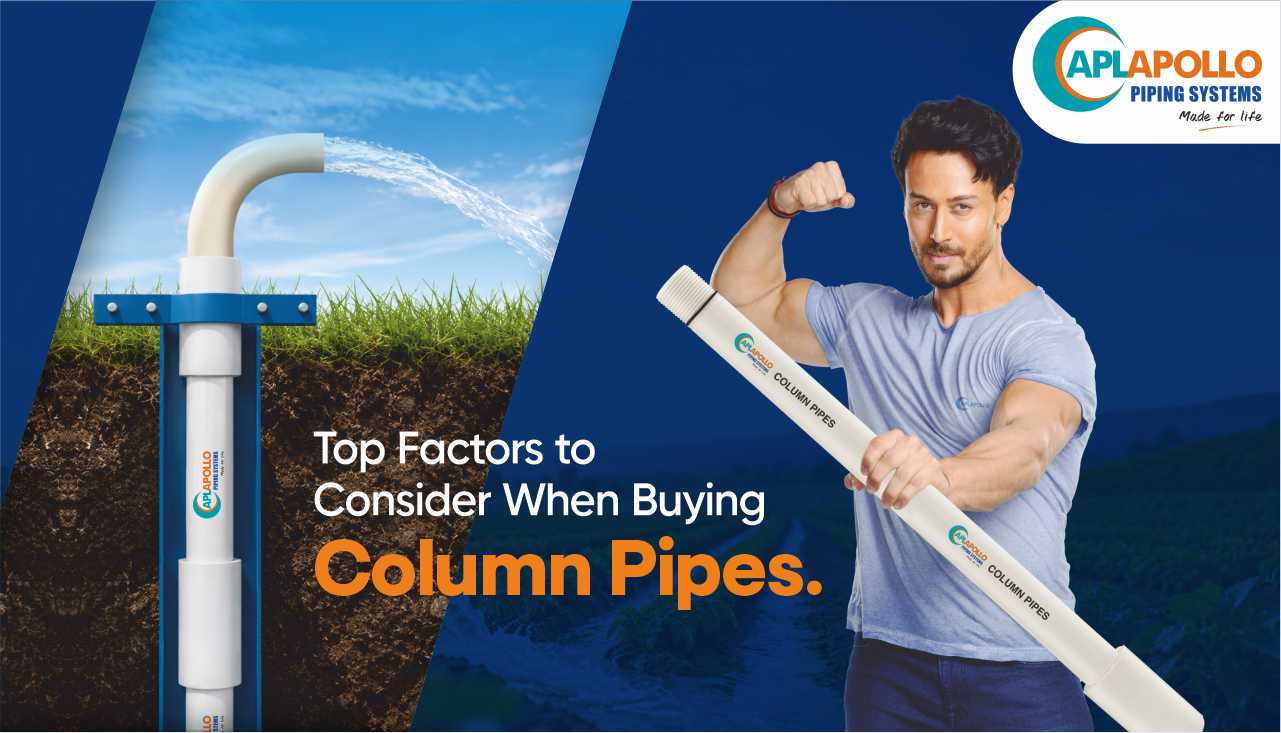
Column pipes play an important role in borewell and submersible pump systems by supporting the pump and carrying underground water to the surface. They are commonly used in agricultural irrigation, residential water supply, and industrial applications. Choosing the right column Pipes is essential for supporting the pump’s weight, maintaining dependable water delivery, and ensuring long-term performance. Before making a purchase, buyers should consider factors such as material quality, load-bearing capacity, pipe size, joint strength, and overall cost-effectiveness. A little attention to these details can help prevent installation problems and unnecessary maintenance expenses later.
Key Factors to Consider When Buying Column Pipes
1. Material Quality
The material used to manufacture column pipes directly affects their strength, durability, and resistance to corrosion. Pipes installed deep inside a borewell must withstand continuous use and the conditions in which they operate. uPVC column pipes are worth considering because they are resistant to corrosion and do not rust like conventional metal pipes. However, buyers should also check the product’s intended application, material quality, and specified load capacity before selecting column pipes for borewell installations.
2. Load-Bearing Capacity
A column pipe must support more than the weight of the water passing through it. It also carries the submersible pump and the pipe’s own weight. As the installation depth increases, the total suspended load can become substantial.
Read More: Smart Home Features to Consider Before Listing Your Ilford Property
Choose submersible pump column pipes with a load-bearing capacity suitable for the pump model, borewell depth, and operating conditions. Always check the manufacturer’s technical specifications and seek professional advice when determining the required strength class.
3. Pipe Diameter and Size
The correct pipe diameter helps ensure that the system meets its water delivery requirements. An unsuitable size may affect flow, compatibility, or installation, depending on the system design.
Before purchasing, check the submersible pump outlet size, recommended pipe diameter, required water flow, and borewell dimensions. The selected pipe and its fittings must be compatible with the pump and the overall installation. Avoid choosing a size based on availability or price alone.
4. Thread Design and Joint Strength
Threaded connections and couplings hold the column pipe sections together and help support the suspended system. During pump operation, starting and stopping can create sudden movements and mechanical loads that place stress on these connections.
Look for a secure thread design and well-made couplings that suit the intended application. Strong joints can help maintain the stability of the installation and reduce the risk of connection failure during operation.
5. Leakproof Performance
Water leakage at pipe joints can reduce delivery efficiency and lead to additional pumping effort or maintenance. Therefore, examine the coupling design and how securely the joints connect the pipe sections.
Properly fitted, leak-resistant connections help maintain dependable water delivery from the borewell to the outlet. Correct installation is equally important, so the manufacturer’s joining instructions should always be followed.
6. Chemical Resistance
Groundwater conditions can vary depending on the location, surrounding soil, and dissolved substances. A pipe’s resistance to chemical exposure and corrosion can influence its service life.
When evaluating borewell column pipes, consider the material’s chemical resistance and suitability for the local operating environment. This is particularly relevant for agricultural and industrial installations, where groundwater conditions may differ considerably.
7. Installation and Handling
Column pipes may need to be transported to remote farms, moved around a residential construction site, and lowered into deep borewells. Their weight and ease of handling can affect installation time, labour requirements, and overall convenience.
Lightweight pipes can make transportation and handling easier, although installers must still use appropriate equipment and follow safe lifting procedures. Check that compatible fittings and accessories are available for a smooth installation.
8. Durability and Maintenance
Replacing a pipe installed deep inside a borewell can be time-consuming and expensive. For this reason, durability should be a major consideration rather than an afterthought.
Assess the pipe’s material, joint construction, load rating, and expected suitability for continuous use. Reliable connections and corrosion-resistant materials can help reduce certain maintenance concerns. Regular inspection of accessible components and correct installation also contribute to the long-term performance of the system.
9. Price and Overall Value
The cheapest option may not always offer the best value over time. A pipe with unsuitable strength or poor-quality connections could lead to additional repair or replacement expenses.
Compare products based on material quality, load capacity, durability, installation requirements, and maintenance costs. Consider the total cost of ownership instead of focusing only on the initial purchase price. The right choice should balance affordability with the requirements of the application.
10. Manufacturer Reputation
A reliable manufacturer should provide clear product information, suitable size options, and technical specifications that help buyers make informed decisions. Consistency in manufacturing quality and access to product guidance are also important.
Read More: Where to Find Premium Plots Near IVC Road Airport?
Before purchasing, review the manufacturer’s official product information and confirm that the selected pipe meets your system requirements. Contractors, farmers, and homeowners should also ensure that the product and its accessories are appropriate for the planned installation.
Why Choosing the Right Column Pipes Matters
Choosing suitable column pipes helps support safe pump operation, reliable water extraction, and long-term system performance. The right combination of material, strength, diameter, and joint design can also help minimise avoidable maintenance and replacement costs. Whether the installation is for a farm, a home, or an industrial facility, always match the pipe to the borewell depth, pump specifications, and expected operating conditions.
APL Apollo’s Column Pipes
APL Apollo Column Pipes are manufactured using uPVC and designed for borewell and submersible pump applications, making them an option worth considering for agricultural, residential, and industrial water supply needs. Its specialised thread design helps withstand operational shocks and jerk loads, while thick-and-thin manufacturing technology is designed to provide uniform pipe thickness.
These Column Pipes offer high tensile load capacity to support the combined weight of the pump, water, and pipe. Additional features include chemical resistance, a super-lock system, and leakproof couplings secured using nylon wire. Its lightweight construction supports easier handling, transportation, and installation, while the manufacturer highlights durability and economical operation among their benefits.
APL Apollo Column Pipes are available in diameters ranging from 33 mm to 168 mm (1 inch to 6 inches) to suit different installation requirements. To explore available sizes, product features, and technical specifications, visit the official APL Apollo website (www.apollopipes.com) and choose a suitable option for your borewell and submersible pump system.